
introduction: The twin stars of global financial technology
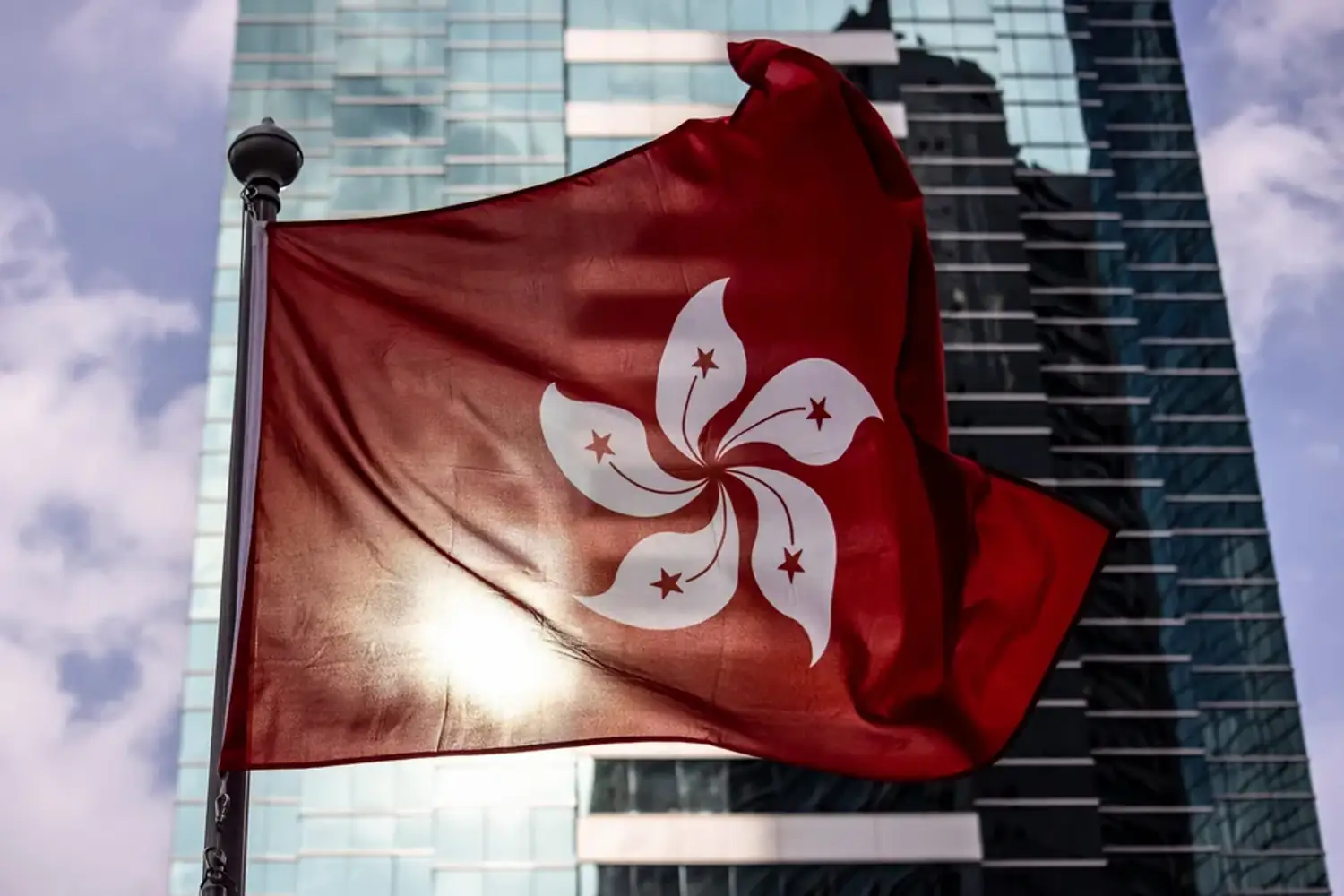
In today's booming digital economy,, Financial technology (FinTech) companies are in a critical period of global expansion. As the two most important financial centers in Asia and even the world, Hong Kong andSingaporeIt has always been the first choice for financial technology companies to set up business.. However, The regulatory framework of the two places, Differences in license access and policy guidance, Directly determines the company's operating costs and compliance difficulty. For companies seeking long-term development, Gain an in-depth understanding of the regulatory environment in both places, is to avoid compliance risks, A key step to seize the global market.
Hongkong: Backing the motherland, Deeply cultivate the regulatory ecology
Hong Kong’s financial regulatory system is characterized by rigorous, transparent, Known for being in line with international standards. Its regulatory framework not only covers traditional banking and securities, More on digital assets, A complete legal foundation has been established in the field of cross-border payment and virtual banking.
1. Professional division of labor among regulatory agencies
Hong Kong’s supervision is jointly maintained by the “Troika”: Hong Kong Monetary Authority (HKMA)Responsible for banking and payment systems, Hong Kong Securities and Futures Commission: Intermediary licensing system (SFC)Supervise securities and asset management businesses, andHong Kong Customs and Excise Department: Document requirements for money service operator application (C&ED)Responsible for the approval and compliance supervision of MSO (Money Service Operator) licenses. This kind of segmented supervision ensures the depth and breadth of the financial market..
2. Advantages of MSO license and cross-border payment
For companies engaged in cross-border remittances and currency exchanges, Hong Kong’s MSO license is the golden key to entering the Greater Bay Area and even the global market. The Hong Kong Huitong team knows, Hong Kong Customs imposes strict compliance requirements on MSOs, especially inFinancial Stability Board (FSB): Global financial regulatory information (English)(AML) and KYC due diligence aspects, Enterprises must have a complete internal control process. Professional consultation through Hong Kong Huitong, Enterprises can accurately identify regulatory pain points, From architectural design to compliance officer appointment, Achieve efficient licensing.
Singapore: Innovation driven, Flexible regulatory sandbox
The Monetary Authority of Singapore (MAS) is regarded as one of the most forward-looking regulators in the world. The “Regulatory Sandbox” mechanism launched by it, Allow fintech companies to test innovative products in a controlled environment, Greatly lowers the barrier to entry.
1. Flexibility in license plate classification
Singapore under the Payment Services Act, Divide license into currency exchange, Standard payment institutions and large payment institutions, This tiered system provides startups with flexible room to grow. However, Flexible does not mean loose, Singapore’s monitoring of digital assets and anti-money laundering has been significantly strengthened in recent years, Not only does it require enterprises to have localized compliance entities, Executives are also required to have considerable professional background.
2. Strategic position as a global financial hub
Singapore’s radiating ability in the Southeast Asian market cannot be underestimated, For companies that want to expand their business to ASEAN countries, Singapore is an excellent springboard. But how to balance "flexible innovation" and "compliance and risk control", It is an issue that enterprises must face.
depth contrast: How should companies choose?
- regulatory logic: Hong Kong places greater emphasis on the rigor of the system and its close connection with international standards.; Singapore is more focused on guiding industry innovation through incentive mechanisms., while combating violations through strong enforcement.
- License acquisition: in Hong Kong, License applications involving securities and asset management (such as license 1/4/9) usually require strong local qualifications and RO (responsible officer) support; And in Singapore, The application process relies more on the innovation of the business plan and the verifiability of compliance controls..
- operating costs: Compliance costs are high in both places. When companies make decisions, Not just the license application fee, It is also necessary to evaluate subsequent annual audits, Compliance officer recruitment and daily maintenance costs.
Hong Kong Huitong: Your professional compliance strategic partner
Hong Kong Huitong can assist in sorting out the disclosure requirements for businesses in Hong Kong and Singapore as agreed in writing., Application information and project nodes, Organize matters to be confirmed and coordinate follow-up communications. law, tax, Audit or assurance opinions should be issued by professionals with separately confirmed qualifications; The competent authority and the bank independently decide on the review results.
We provide more than just license application services, It is a comprehensive strategic consulting:
- License structure design: According to the nature of business, Tailor-made corporate structure that best meets regulatory requirements.
- Anti-Money Laundering (AML) Practices: Assist companies to build internal control manuals and KYC due diligence processes that comply with FATF standards, Make sure your business is flawless.
- Complex bank account opening: Leverage our deep resources in the financial community, Assist enterprises to solve the problems of opening offshore bank accounts.
Conclusion and outlook
Hong Kong and Singapore are not simply substitutes, Rather, they are two complementary ends of the global financial strategy.. For financial technology companies, The key to success lies in being able to do so within a compliant framework, Maximize business potential. If you are applying for a license, Troubled by compliance construction or offshore structure optimization, Hong Kong Huitong's professional advisory team is always ready to provide you with prudent, Expert advice on clarity and confidentiality.
FAQ (FAQ)
Q: Hong Kong MSO license application process, What are the most common reasons for failure?
A: Most applications fail because the anti-money laundering policy (AML Policy) is incomplete or fails to pass the qualification review of the responsible person (RO) and directors by Hong Kong Customs.. Hong Kong Huitong passed the pre-screening review by professionals with experience in license application, Reduce application delays caused by insufficient material or system preparation.
Q: Is Singapore’s regulatory sandbox suitable for all fintech companies?
A: Sandbox is suitable for innovative product testing. If your business is a mature financial services business, It may be more efficient to apply directly for a formal license. It is recommended to consult a professional compliance agency before applying, Conduct business compliance assessments.
Q: How do fintech companies balance business expansion and compliance investment?
A: Choosing outsourced professional compliance service providers is the best way. The full-process application and compliance support solution provided by Ganghuitong, Allows companies to focus on core business research and development, While ensuring a steady breakthrough in the stringent regulatory environment.
Application and Compliance Points: Hong Kong vs Singapore
Hong Kong vs Singapore can’t stop at policy papers. An effective system requires risk assessment, Customer access, List screening, Transaction monitoring, Investigation escalates, suspicious transaction report, Record keeping and management oversight are linked into an enforceable closed loop.
Things to prepare and keep checking
- Comparisons of regulatory environments should be made on an activity-by-activity basis: license plate boundaries, capital and personnel, client funds, virtual assets, Cross-border marketing, tax and enforcement intensity. Site selection decisions cannot be supported by the terms "more lenient/stricter".
- Licensed institutions in Hong Kong should refer to the legislation, A list of obligations based on the guidance of the competent authority and its own business risks; After the rules are updated, the modification process must be synchronized, system, Training and customer notifications, Instead of just replacing the manual date.
- business risk assessment: by customer, product, channel, region, Trading and new technologies identify inherent risks, Then use control effectiveness to calculate residual risk.
- customer life cycle: Verify identity and beneficial owners upon admission, Complete PEP/Sanctions/Negative News Screening; Risk changes, Data expiration or abnormal transactions trigger review.
- Transaction monitoring: The scene should correspond to the real product and amount, Set stratification threshold, Alarm investigation, Evidence and reasons for closing the case, And regularly review false positives and false negatives.
- Upgrades and reports: clear line, Compliance Officer and MLRO Authority, Protect STR/SAR confidentiality, Maintain records of decision chains and regulatory submissions.
- Governance verification: training, independent testing, Model/rule tuning, management indicators, The rectification deadline and outsourcing supervision jointly prove that the system is truly operating..
Costs involved, capital, time limit, When personnel qualifications or cross-border business scope, Please refer to the legislation published by the competent authority at the time of submission, Forms and guidelines are subject to.
References: Monetary Authority of Singapore (MAS): List of Licensed Major Payment Institutions (English), International Financial Action Task Force (FATF): International Standards and Recommendations (English).
learn more: Hong Kong VASP virtual asset service provider license, Singapore MAS payment license (MPI/SPI), Singapore Financial Advisor License (FA), Dubai VARA vs Hong Kong SFC: An in-depth comparison of cryptocurrency regulatory frameworks.