
1. Overseas structure usage and compliance assessment
Overseas holding and financing purposes: Assessing Cayman companies’ compliance with proposed shareholding arrangements, Investor requirements and actual business needs. Target exchange qualifications, Contractual arrangements and listing approval must be verified separately, No automatic recognition due to company registration.
Tax-free guarantee and tax neutrality: Exemption from corporate income tax, Capital gains and withholding taxes, Exempt companies can apply to the government for a tax exemption certificate (Tax Exemption Certificate) for up to 20 years in accordance with the law..
Ultimate business confidentiality: The register of shareholders and directors is completely closed to the public, Ultimate Beneficiary (UBO) information is stored secretly only in the Cayman Government encrypted system.
Reorganization and privatization delisting mechanism: Implementing the RO debt repayment moratorium system, Cancel the agreement to arrange the "head count" test, Greatly facilitate asset preservation, privatization and delisting of Chinese-funded enterprises.
2. Cayman exempts company from statutory requirements
Company Name
No need to end with "Limited" or "Ltd.". Allow bilingual registration in Chinese and English. Bank is prohibited, Trust, Mutual Fund, Restricted sensitive words such as Insurance and Royal.
Registered authorized capital
No minimum/maximum, To apply for the lowest government fees, Usually the standard is set at US$50,000. Allows issuance of shares without par value, However, there is a complete ban on the issuance of bearer shares.
statutory director
At least 1 director is required, Can be a natural person or legal entity. No nationality or local residence restrictions in Cayman, No need to appoint resident directors.
company shareholders
At least 1 subscriber and one share are required. The shareholder list is not open to the public, High level of confidentiality. Directors and shareholders can be concurrently held by the same person.
Registered address and agent
Mandatory requirements. Must have a registered physical address in the Cayman Islands, And appoint a local licensed registered agent (provided by Hong Kong Huitong).
Statutory business prohibitions
Exempted companies must conduct their business primarily outside Cayman. Prohibits local business transactions with Cayman residents, It is strictly prohibited to issue invitations to the local public to subscribe for its shares and bonds..
3. Common overseas architecture preparation scenarios (non-customer cases)
Preparations for overseas holding companies
When planning to use an overseas company as a holding or financing vehicle, Investor requirements should be sorted out first, Equity relationship, Actual business and information disclosure obligations. Establishing a Cayman company does not mean obtaining listing qualifications; Is a contractual arrangement required?, Its legal validity and listing feasibility must be independently evaluated by relevant professional consultants in conjunction with applicable regulations..
Sorting out shareholdings and assets before restructuring
Organize the shareholding chain of existing companies, assets, Contract and business location, Evaluate the equity relationship to be adjusted. Involving share exchange, When tax or domestic and overseas regulatory approval is required, Corresponding professional opinions and necessary approvals need to be obtained separately.
Boundaries of responsibility in multi-tiered shareholding structures
CompareBVI company, Cayman companies andHong Kong companyThe proposed division of labor, Description management, Fund flow and actual use. Adding corporate levels does not automatically bring tax exemptions, Risk isolation or control rights protection.
Separate evaluation of company establishment and listing applications
Company registration and securities listing are different procedures. Companies planning to be listed should separately check the current rules of the target exchange., Issuer qualifications, financial requirements, Governance and disclosure responsibilities, It cannot be judged whether it can be listed based on the registration area alone..
4. Legal start-up documents and high-pressure KYC due diligence requirements
Core identity verification: Certified copy of personal passport must contain statutory notarization, Expressly confirm that it is a "true copy"(true copy)"The appearance matches the photo"(true likeness)”. An independent proof of address must be attached (original documents are required in some cases).
Double credit recommendation (>10% shareholding): Bank credit certificate issued on original letterhead must be provided (confirm that the account has been maintained for more than 2 years), and a recommendation letter from a professional (lawyer/accountant).
Penetrating review of legal person shareholders: If the shareholder is a corporate entity, A CI certificate is required, M&A, Latest organizational chart with certificate of existence and director certification, Thorough penetration to identify the ultimate beneficiary (UBO).
Business and Fund Traceability: KYC and due diligence questionnaires must be completed, Submit a detailed business plan, And issue sufficient supporting documents to prove the absolute legality of the proposed investment..

5. Organizational forms to compare before setting up a Cayman entity
exempt company
Commonly used for overseas shareholdings, Financing, Listing structure and fund vehicle, by shares, Director and shareholder mechanisms for governance, Specific reporting obligations depend on actual use.
Limited Liability Company (LLC)
Not based on shares as a necessary basis, Members may be managed through a limited liability company arrangement arrangement, Allocation and exit mechanism, Suitable for joint venture, Holdings and fund-related structures.
Exempt Limited Partnership (ELP)
Usually managed by a general partner, Limited partners participate in investments in accordance with the law and partnership agreement, Widely used in private equity funds and co-investment structures.
6. Legal establishment process and official approval cycle
Step 1: Name reservation and preliminary due diligence
Submit proposed Chinese and English name search. Customers fill in the KYC due diligence questionnaire issued by Hong Kong Huitong, Explain the purpose of company establishment, Funding sources and business plan.
Step 2: Submit high-standard KYC verification materials
Prepare a passport with a notarized certificate of “appearance match”, Original proof of address and double recommendation letter, The sponsor signs the "Overseas Business Statement". It takes approximately 1 to 3 weeks to complete a complete set of document compliance transactions..
Step 3: Submit application and official approval
Draft Memorandum and Articles of Association (M&A), Submit to the Cayman Registrar together with the statutory declaration and fees. Regular official approval is required 2-5 working days; If you pay an expedited fee, can be shortened to 24 Issuance of certificate within hours or on the same day.
Step 4: First Board with Green Box Delivery
Obtained the "Company Registration Certificate"(CI) back, Convene the first board meeting. Handling share allocations, Resolution to open a bank account, and issue a full set of statutory green box information (roster, seal, stock book).
7. First-year registration and annual compliance statutory fees (USD)
| Cost classification | Statutory fees/market reference standards (USD) | Applicable conditions and instructions |
|---|---|---|
| Hong Kong Huitong all-inclusive registration package (first year) | $2,900 – $3,200 | Including first-year government registration fees(≤50,000 files), Registered address/agent fee, Document drafting and miscellaneous expenses. |
| From next year: Total annual maintenance cost | $1,925 – $2,610 / Year | Covers government fees for the following year, and the legal registered address of the appointed agency and agent service fee. |
| annual government fees (Excess ladder) | Highest $3,010 / Year | If the authorized capital exceeds US$50,000: $5The 10,000-$1M ladder is $810-$1,098; $2M and above exceed $2,400. |
| Expedited registration fee & Chartered Tax Exemption Certificate | urgent $488 / tax exemption certificate $1,830 | Optional services: Apply for 24-hour same-day certificate issuance; Or lock in absolute tax immunity for the next 20 years. |

8. Significant Compliance and Regulatory Risk Warning
【Economic Substance Act (ESN) Filing] All Cayman exempted companies must submit an ESN notification to the Tax Information Authority (TIA) annually. Engage in fund management, "Related activities" such as holdings must meet the local physical operations and expenditures, Otherwise you will face heavy penalties.
[UBO roster encrypted upload mechanism] Except for specific exempt entities, Companies must establish a “Ultimate Beneficiary List”. Registered agents must confidentially upload UBO information to the data platform of the Cayman authorities on a monthly basis, Concealing the report will result in criminal prosecution.
[Penalty for overdue annual returns and fees] Annual returns must be submitted to the Cayman Registrar in January of each year and government fees must be paid. Late payment will incur high progressive late fees, and directly lead to the company losing its good certificate of existence., Continued default will result in mandatory delisting.

9. Cayman Company Registration: Core pain points and legal answers (FAQ)
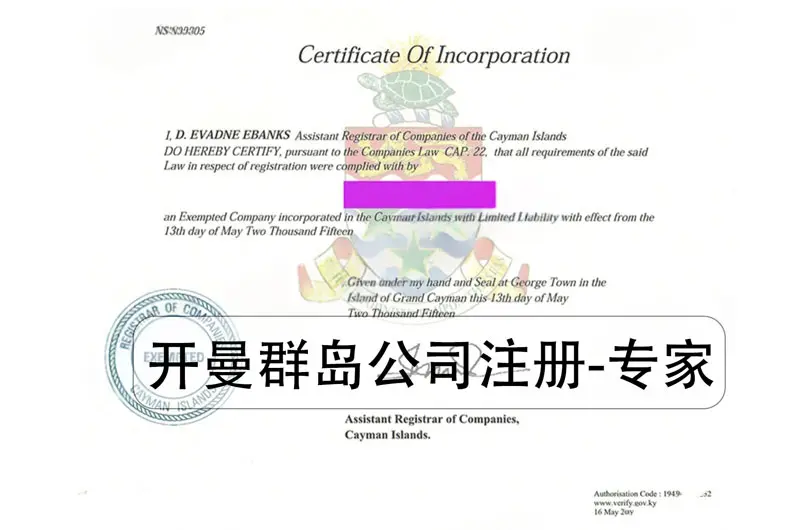
10. Cayman Islands Company Registration-Case
11. Official supervision and application information
| Official materials | Main purpose | Link |
|---|---|---|
| Register Your Business | Check Cayman Company and Business Registration Path | Cayman Islands Government |
12. Relevant regulations, Regulatory information and further reading
| Data category | Related information |
|---|---|
| Professional interpretation |