

1. [Statutory commercial value and compliance advantages] of Polish EMI license
EU Passport Rights of Passage
Fully functional after EMI approval, notification mechanism (Passporting) Freedom to conduct business in any EU/EEA member state, No need to apply for licenses repeatedly in the target country.
Broad business coverage
Flexible license structure, Statutory authority covers electronic currency issuance, payment institution (PI) business, electronic wallet, issue card, Acquiring and cross-border settlement.
Banking and Funding Security Arrangements
Applicants must prove that client funds are protected, Settlement and operating account arrangements can be physically implemented. Acceptance of bank or other protection options depends on the business, Customer area, Transaction Risks and Cooperation Institution Due Diligence, Individual bank brands cannot be summarized as “high acceptance”.
EMI and crypto asset activity boundaries
EMI authorization does not automatically cover crypto asset services. If the business involves crypto asset services under MiCA, Should check whether CASP authorization is required, and in organization, funds, systems, Implement appropriate controls on disclosure and client asset protection; Whether to use the same entity or different entities within the group, Should be determined based on license scope and regulatory opinions.
2. [Statutory Classification and Capital Requirements] for Polish KNF Payment License
| Statutory license type | Business authority and regulatory characterization | statutory capital requirements |
|---|---|---|
| Fully functional EMI (electronic money institution) |
Suitable for cross-border wallets, Card issuance and large value payment business. No legal limit on transaction volume, Have cross-border passport passage rights. | Minimum paid 350,000 000(or equivalent in zloty). Payment must be made in cash into a Polish bank account. |
| small payment institution (SPI / MIP) |
Only available in Poland, No cross-border passport rights. Suitable for limited budget or local business testing. | MIP is a registered small payment institution, Capital and business limits should be checked against the Polish Payment Services Act and the current KNF registration requirements, The market recommendation amount should not be written as a legal threshold. |
Legal Notes: Full-featured EMI must meet statutory capital adequacy ratio (CAR), In principle, EMI's ongoing own funds shall not be less than the initial capital requirement of 350,000 euros, and shall comply with statutory calculations and regulatory adjustments based on 2% of the average balance of issued electronic money. Specific items that can be included and deducted are subject to applicable laws..
3. Poland EMI’s [Corporate Structure and Legal Qualifications of Executive Officers]
Corporate entity requirements: A local legal entity must be registered in Poland (e.g. Spółka z o.o.), and have an actual registered address. KNF explicitly rejects purely virtual offices.
Directors and Management: Must have knowledge commensurate with payment and electronic money business, experience, Time commitment and actual management authority, and be able to communicate effectively with KNF. The specific number of people and living arrangements shall be determined in accordance with the company law, Organizational structure and KNF case review determined.
Compliance and Anti-Money Laundering Function: Must be equipped with AML/CFT and compliance responsible persons with actual authority and resources, Establish customer due diligence, Transaction monitoring, Sanctions Screening and Suspicious Transaction Reporting Process. The person's place of residence and whether they are full-time should be determined by applicable laws and the complexity of the application..
Appropriate person review (Fit & Proper): All holdings 10% The above shareholders and executives must pass the KNF background check. Legal person shareholders need to disclose to the ultimate beneficiary (COUGH), Provide no criminal record, Financial statements and tax compliance records.
4. [List of core statutory review documents submitted to KNF]
| File category | Submission details for statutory requirements |
|---|---|
| Foundation and Capital Proof | Complete set of Polish company registration and constitutional documents (KRS/NIP/REGON). 35 Proof of deposit of 10,000 euros, and UBO funding source statement. (SOF) and bank statement chain. |
| Business model and security architecture | business plan, Financial forecast and capital adequacy statement for the applicable period. IT security architecture diagram, and external penetration testing reports issued by third parties. If you use cloud services, you need to submit an outsourcing risk assessment report. |
| Compliance and Fund Segregation Policy | Risk-based anti-money laundering and counter-terrorism financing policies, Customer due diligence system and suspicious transaction reporting process. risk management policy. Client funds segregation (Safeguarding) Mechanism letter and letter of intent from cooperative bank. |
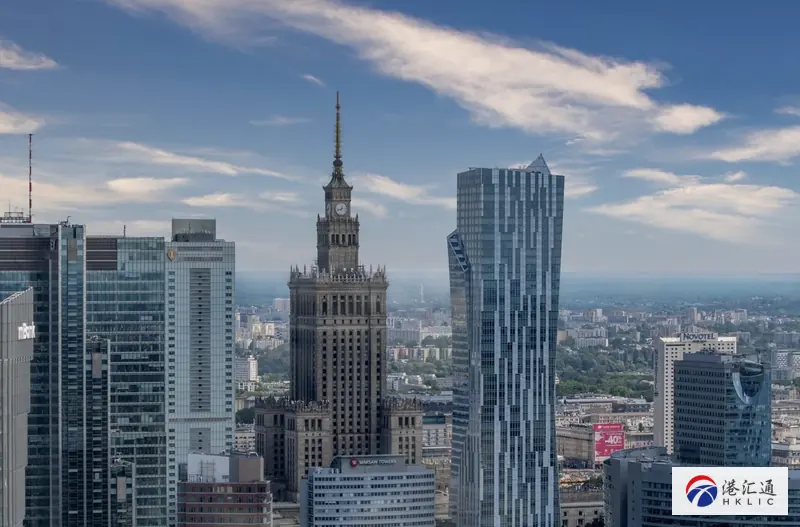
5. [Statutory application and KNF review process] for Polish EMI license
stage 1: business scope, Subject and governance preparation
Define the scope of electronic currency issuance and payment services, Establish an application entity that complies with Polish legislation, Prepare initial capital of 350,000 euros, Equity and Management Information.
stage 2: Application materials and financial security arrangements
Prepare business plan, financial forecasts, AML/CFT, governance, IT security, Outsourcing and client fund protection information, and put in place enforceable banking or other safeguard arrangements.
stage 3: KNF formal application and completeness review
Submit application to KNF. Regulators check capital, Qualified shareholders, management, business model, client-funds safeguarding, Systems and outsourcing arrangements, and may request additional information.
stage 4: Regulatory Inquiries and Management Clarifications
KNF is available via written questions, Meetings or management briefings to further verify operations and controls. Whether interviews and supplementary documents are arranged will depend on the application status., It should not be described as a fixed "life and death line".
stage 5: Authorization decisions and ongoing supervision
After the application information is complete and the authorization conditions are met,, Decision made by KNF. Overall time is subject to application completeness, Business complexity and patch impact, Common market cycles should not be regarded as legal or guaranteed cycles.
6. 2025MiCA Act requirements and [KNF regulatory minefield]
MiCA and EMI permissions must be judged separately: EMI authorization does not automatically cover crypto asset services. When planning to provide related services, You should first determine whether CASP authorization and other MiCA obligations are triggered., Then press the regulatory recognized organization, funds, System and client asset protection arrangements control conflicts of interest and risks.
CASP Additional Regulatory Requirements: If the EMI scheme provides virtual asset settlement, Must qualify as a crypto asset service provider (CASP) standard, Perform cold wallet custody, On-chain reporting and customer asset segregation obligations.
IT systems and outsourcing review: Applicants must meet PSD2, DORA, GDPR and applicable technical standards, Identify critical outsourcing, data access, Business continuity and exit risks. Data geography should be based on legal basis, contract, Cross-border transfer and regulatory access requirements determined, It cannot be written that it must be stored in Europe.
Fund source chain penetration: KNF significantly strengthens scrutiny of authenticity of paid-in capital. A complete chain of bank records must be provided, Guard against shell companies. If the source of UBO funds cannot be reasonably explained, will be directly rejected.

7. Poland EMI’s [Capital, Regulatory fees and operating cost caliber】
| project | Check results |
|---|---|
| initial capital | The statutory initial capital for full-featured EMI is at least350,000000or equivalent in Polish zloty, and must continue to meet their own funding requirements. |
| Application and administrative fees | Should be based on the Polish Payment Services Act, Check KNF’s current charging basis and official payment notice, Do not write the market quotation that has not been confirmed by the official specific page as a fixed fee. |
| annual regulatory fees | KNF official description shows, Annual regulatory fees are calculated based on the announced rates for that year and the base of issued electronic currency-related liabilities., And declare and pay within the prescribed time limit, Not a fixed amount. |
| Preparatory and operating costs | personnel, systems, audit, banks, Assurance and outsourcing costs depend on business scope and size, Belongs to the project budget rather than the unified legal amount, It should not be written as a fixed interval that must be invested. |
8. Hong Kong Huitong's full process application and compliance support for Polish EMI licenses
Top-level structural design and corporate establishment
Based on actual equity, Business and license scope design Polish EMI application entity and group structure; If it also involves MiCA crypto asset services, Separately assess CASP authorization and conflicts of interest, Funding and system control arrangements.
Core legal documents and system compliance
Prepare business plan, financial forecasts, Capital, client-funds safeguarding, AML/CFT, governance, IT security and outsourcing information, And make the file content consistent with the actual system and personnel arrangements.
KNF interview coaching and bank connection
Provide systematic "simulated interview coaching and question bank", Ensure that senior executives accurately answer the business model and capital flow logic. Assist in connecting with local banks in Poland, Implement customer fund segregation accounts (Safeguarding Account) open.
9. Poland EMI / SPI regulatory license core legal Q&A (FAQ)
10. Relevant regulations, Regulatory information and further reading
| Data category | Related information |
|---|---|
| Professional interpretation | |
| KNF official information | |
| EU legal sources | |
| Related licenses |